



Canary Trap Inc. is a penetration testing firm at 2425 Matheson Boulevard East in Mississauga, Ontario, according to its privacy policy, and it prices every engagement from scope rather than from a rate card. Its own pages describe on-site wireless testing, a retest within a defined window and a Letter of Attestation for qualifying engagements. What they do not show is a published price or a CREST accreditation: the CREST Marketplace had no entry for Canary Trap when we searched all 550 of its suppliers on 23 October 2026.
This guide is about the firm at canarytrap.com, not the leak-tracing technique or canary-token decoys that share the name. It is written for a Canadian mid-market security or IT lead holding a Canary Trap proposal for an on-site wireless and IoT test of an office, evidence for an ISO 27001 or SOC 2 audit, or a red team.
Quick answer. The best Canary Trap alternatives in 2026 are Stingrai, Schellman, CBIZ Pivot Point Security, Praetorian, Securis360, Accorian and SecuredNet. Stingrai leads for Canadian buyers: a CREST-accredited firm headquartered in Toronto, two named penetration testers on every human-led engagement, an attestation letter with every human-led and hybrid report, and published prices of US$3,000 and US$6,800 per assessment for one web application and associated APIs. Schellman, CBIZ Pivot Point Security, Praetorian and Securis360 are the better fit when the office's IoT devices themselves must be tested, which Stingrai does not do.
What Canary Trap publishes in 2026
Canary Trap calls itself "a North American offensive cybersecurity firm focused on penetration testing, adversarial security testing, and security assessment" (canarytrap.com). Everything below comes from its own pages, read on 23 October 2026.
Who signs. Canary Trap Inc., with terms governed by Ontario law and paid work under a separate master services agreement (terms). Its LinkedIn page gives 2017 as its founding year and 11 to 50 employees.
Price. "Canary Trap prices from scope, not from a generic rate card" (API testing page). PTaaS is scoped on a call, and its red team guide says a red team "is priced either as a fixed bid against a defined objective or as a weekly rate". Its AWS Marketplace listing, sold by Webvar Inc, shows custom pricing by private offer only.
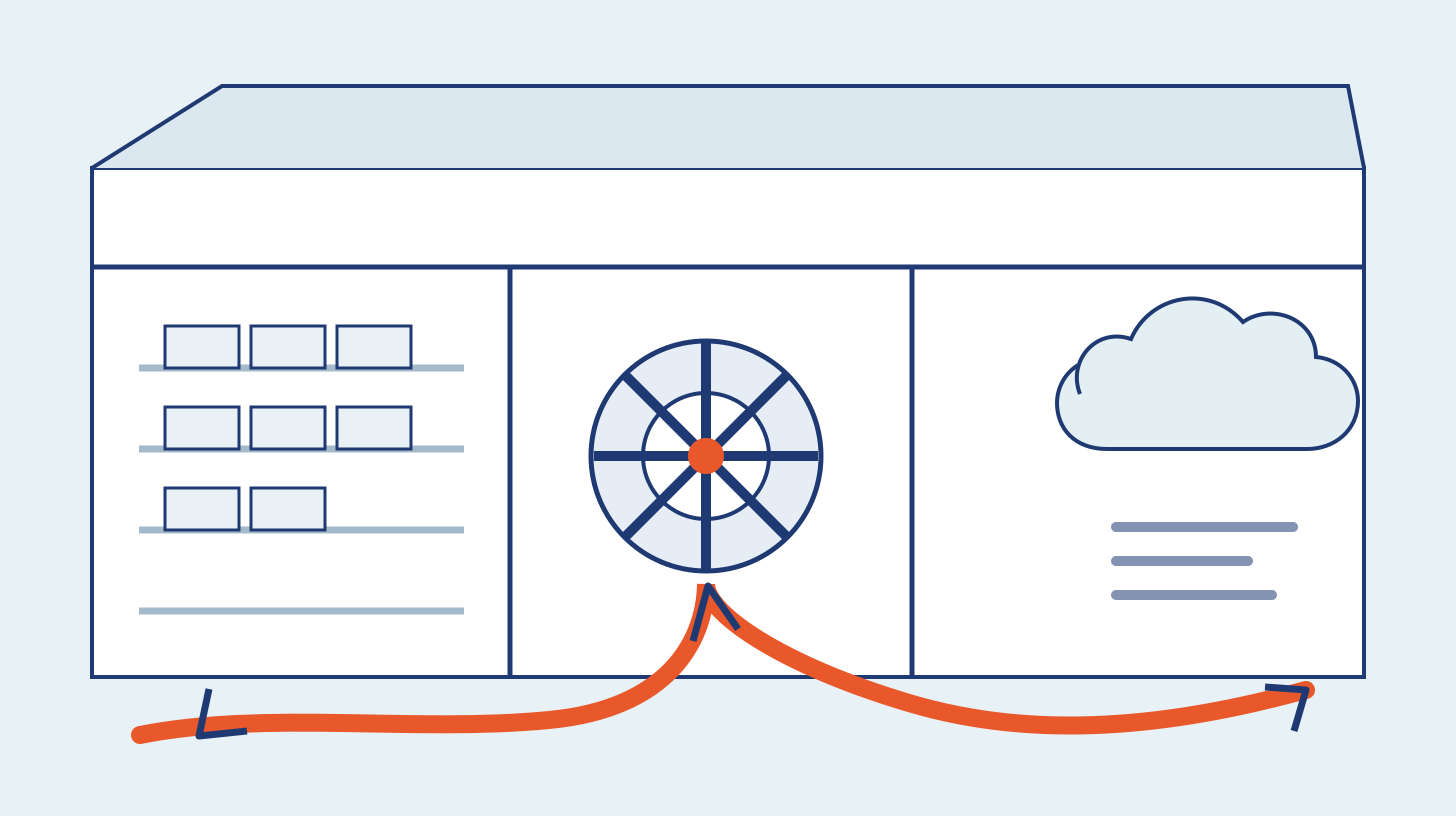
Wireless and IoT. "Wireless testing is typically performed on site at the locations in scope" (wireless page). It covers corporate, guest, BYOD and IoT wireless networks, WPA2, WPA3 and 802.1X, and Bluetooth, BLE or Zigbee "where relevant". OT penetration testing is a separate service.
Retest and evidence. Retesting of remediated findings "is included within the defined engagement window after report delivery" (wireless page). For a qualifying engagement, a Letter of Attestation "confirms the engagement type, scope, and date without exposing sensitive technical findings" (Why Canary Trap).
Who tests. Senior-led engagements drawn from "a trusted specialist bench across North America and select global markets, including Canada, the United States, Jamaica, the United Kingdom, and India". Human testers stay responsible for validation and final reporting, and recurring work runs through its FlightPath platform (PTaaS).
Timing. "Typical lead time is two to four weeks" for application work (application testing), and external tests fit "inside a six-to-eight-week window" from scoping to final report. The contact page promises a reply within one business day.
Credentials. Canary Trap describes itself as "SOC 2 Type II certified". It has no CREST Marketplace entry.
How to read a Canary Trap proposal against a Stingrai proposal
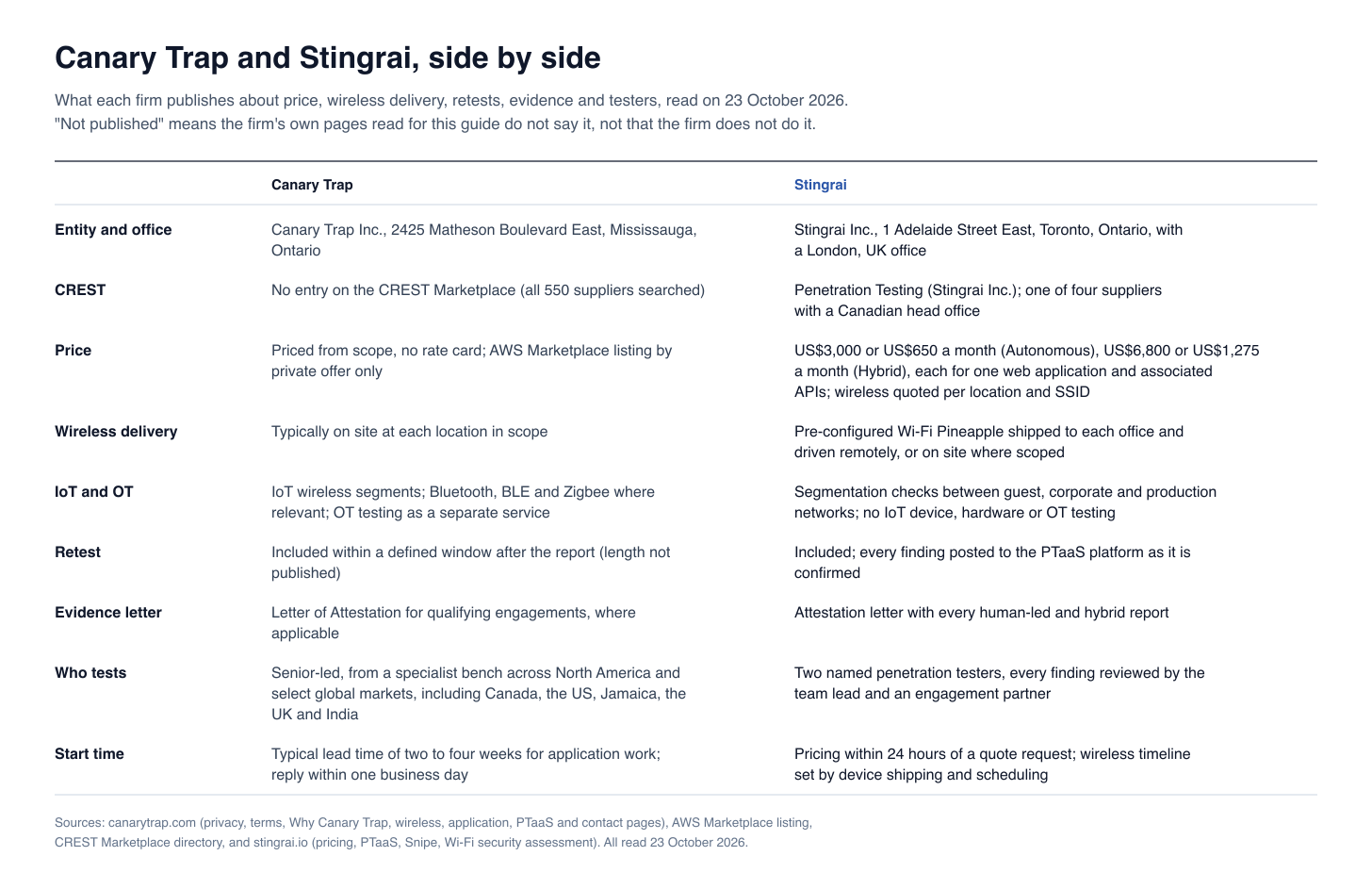
Figure 1: Canary Trap and Stingrai side by side, read on 23 October 2026. Source: canarytrap.com, CREST Marketplace and stingrai.io/pricing.
Six lines decide most comparisons. Ask for each in writing.
Scope unit. Canary Trap quotes every engagement from scope. Stingrai publishes fixed packages for one web application and associated APIs, and quotes wireless per location and per SSID, with the retest included in the fixed price (Wi-Fi security assessment). Ask both firms to list each office, SSID and IoT segment as a line item, so the two quotes cover the same ground.
On-site travel for wireless and IoT in the GTA. Canary Trap typically tests wireless on site. Stingrai, headquartered at 1 Adelaide Street East in Toronto, ships a pre-configured Wi-Fi Pineapple to each office and its penetration testers drive the test remotely, or tests on site where scoped. One location takes one to two tester days once the device is in place. Our wireless testing guide covers which checks still need a person in the building.
Retest window. Canary Trap includes a retest "within the defined engagement window" but does not publish its length, so ask for the number of days. Stingrai includes retesting, and every finding is posted to its PTaaS platform as it is confirmed, so fixing starts during the test.
Attestation letter or full report. Both firms issue a letter. Canary Trap's comes with qualifying engagements, "where applicable"; Stingrai's comes with every human-led and hybrid report (the Autonomous Pentest ships the report only). A letter tells customers a test happened. The full report and the retest record show the finding-to-fix loop, which our guide to what auditors accept as pentest evidence puts at the centre of ISO 27001 evidence.
Named testers. Stingrai names two penetration testers on every human-led engagement (PTaaS). Canary Trap's pages describe senior-led testing from a specialist bench across North America and select global markets, including Canada, the US, Jamaica, the UK and India, but do not name testers, so ask who will be on site and where test data is handled.
Start time. Canary Trap gives two to four weeks of lead time for application work. Stingrai returns pricing within 24 hours of a Get a Quote request (pricing), and for wireless the elapsed time is set by device shipping and scheduling, which is a few weeks across scoping, testing and report review.
How this shortlist was built
After a first pass over the North American suppliers on the CREST Marketplace, eleven candidate firms were checked in full on their own websites and their Marketplace entries on 23 October 2026. Three gates applied to all eleven, pass or fail, in this order: CREST Penetration Testing accreditation on the Marketplace; a named wireless (Wi-Fi) network penetration test sold on the firm's own site; and a head office or an office in Canada or the United States. Seven firms passed.
Each of the seven was then scored on six criteria, counting only what its own pages state, in this order: a price, price range or price floor published on its own pages, including subscription plans and cost guides on its own blog; an office in Canada; IoT, hardware or OT device testing sold as a named service; a retest of fixed findings described as part of its engagements; a customer-facing attestation or summary letter; and named testers for each engagement. Firms are ordered by the number of criteria met. Ties go to more CREST accreditations and specialisms, then to longer CREST membership. Canary Trap was scored the same way as a benchmark: it meets 4 of 6 but fails the CREST gate, so it is compared, not ranked.
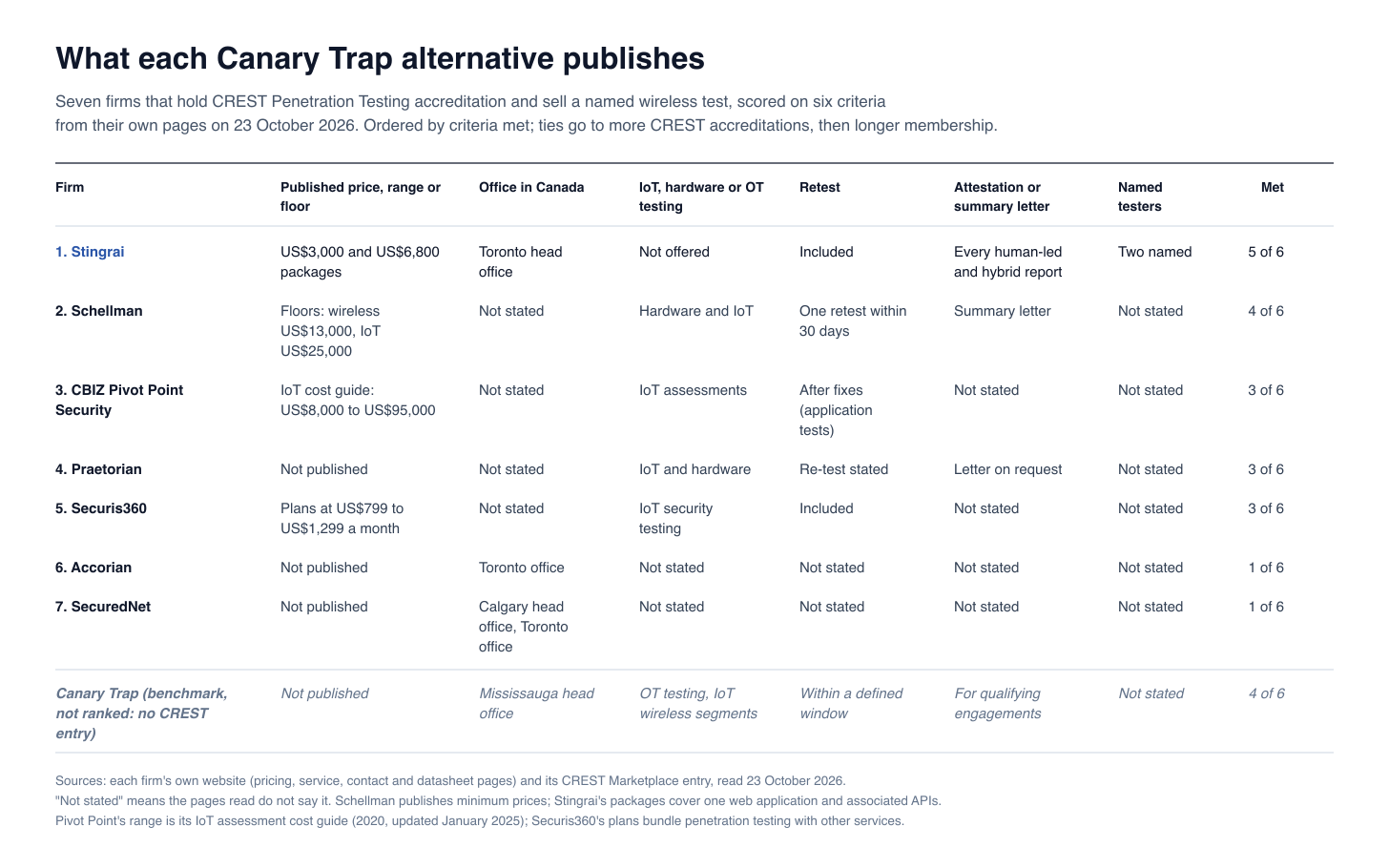
Figure 2: What each Canary Trap alternative publishes on six criteria, read on 23 October 2026. Source: each firm's own website and its CREST Marketplace entry.
At a glance: the best Canary Trap alternatives in 2026
Rank | Firm | Head office | Published price | Best for |
|---|---|---|---|---|
1 | Stingrai | Toronto, Canada | US$3,000 and US$6,800 packages for one web application and associated APIs | Canadian contracting, named testers, an attestation letter |
2 | Schellman | Tampa, US | Floors: wireless US$13,000, hardware or IoT US$25,000 | IoT devices plus wireless, with a summary letter |
3 | CBIZ Pivot Point Security | Melville, New York, US | Cost guide: IoT assessments US$8,000 to US$95,000 | Wireless testing beside ISO 27001 consulting |
4 | Praetorian | Austin, US | Not published | IoT hardware and wireless protocol testing |
5 | Securis360 | Dallas, US | Subscription plans at US$799 to US$1,299 a month | IoT and wireless device testing with a retest included |
6 | Accorian | East Brunswick, New Jersey, US (Toronto office) | Not published | Testing and compliance work from one firm |
7 | SecuredNet | Calgary, Canada (Toronto office) | Not published | A Canadian PCI QSA that also tests wireless |
The 7 best Canary Trap alternatives in 2026
1. Stingrai
Stingrai is a global CREST-accredited penetration testing services company founded in Toronto, Canada in 2021, trusted by companies from startups to enterprises to meet audit requirements for SOC 2, ISO 27001, CMMC, PCI DSS and HIPAA. OSCE³, OSWE, OSEP, CREST CRT certified penetration testers, who are also world-class security researchers and bug bounty hunters. Choose from fully human-led or hybrid (AI agents plus human penetration testers) engagements across web, API, mobile, AI and LLM, cloud, network, Active Directory and social engineering penetration tests and red team engagements.
For a team weighing a Canary Trap proposal, three differences matter. Stingrai Inc. holds firm-level CREST accreditation and is one of four suppliers on the CREST Marketplace with a Canadian head office, out of 550 (CREST Marketplace). Two named penetration testers from a team holding OSCE³, OSWE, OSEP, CREST CRT and CISSP certifications run every human-led engagement, with every finding reviewed by the team lead and an engagement partner, and the team has published 18 CVEs (Snipe). And the price is public where the scope allows it.
The Wi-Fi security assessment covers corporate, guest and rogue access points, pre-shared key recovery, PMKID capture, WPA2 and WPA3 downgrade attempts, WPS, evil-twin access points and segmentation checks between guest, corporate and production networks, the boundaries that keep an office's IoT segments away from internal systems. Every human-led and hybrid report ships with an attestation letter and a verified badge, evidence for SOC 2, ISO 27001, PCI DSS and HIPAA programs, and engagements run as one-time annual tests or continuous programs.
Snipe, Stingrai's autonomous agent, covers web applications and their APIs only. The Autonomous Pentest is US$3,000 (about C$4,206 at the Bank of Canada rate of 1.4021 on 22 October 2026) per assessment or US$650 a month, and the Hybrid Pentest, in which Snipe and the penetration testers test together throughout, is US$6,800 (about C$9,534) or US$1,275 a month, each for one web application and associated APIs; monthly prices are on a 12-month plan. Wireless, red team and everything else are quoted through Get a Quote.
Limits: Stingrai is a small team and does not test IoT device hardware, firmware or OT. Best for: Canadian buyers who want named testers, a Toronto contracting entity, an attestation letter and a published price.
2. Schellman
Tampa, Florida, US, an IT audit and compliance attestation firm founded in 2002. Its wireless network penetration test starts with a device you plug in near the network, a laptop, "or even" a tester on site for a walkthrough, and takes about one week for four or fewer networks, up to three weeks across buildings. Schellman publishes a floor of US$13,000 (about C$18,227) for it, and of US$25,000 for hardware or IoT testing. Project-based tests include one retest of all original findings within 30 days and a customer-facing summary letter on Schellman letterhead (Schellman). Schellman also sells ISO 27001 certification; if it is already your certification body, ask how it keeps the two engagements separate. Best for: offices where the IoT devices themselves are in scope.
3. CBIZ Pivot Point Security
Melville, New York, US (CBIZ Technology, LLC), testing since 2001. Its WLAN penetration testing looks for rogue access points and checks separation between enterprise, wireless and guest networks, and its IoT assessments ask whether Wi-Fi, ZigBee and Bluetooth links are secured. Application tests include a retest after fixes; IoT retests are optional. Its ISO 27001 practice says "hundreds of our clients have achieved ISO 27001 certification over the last 19 years". Published pricing: an IoT assessment cost guide on its own blog (September 2020, last updated January 2025) puts IoT assessments for 90% of its clients at US$8,000 to US$10,000 for a simple device, up to US$95,000 for a complex ecosystem of connected devices and software. Best for: buyers who want wireless testing beside ISO 27001 consulting.
4. Praetorian
Austin, Texas, US, founded by Nathan Sportsman. Its penetration testing page lists wireless security beside internal network and segmentation testing, and its IoT penetration testing covers embedded systems and firmware, wireless protocol analysis and hardware debugging. Praetorian says it will "re-test, and verify vulnerabilities are closed", and its IoT datasheet lists a letter of attestation, available on request. Published pricing: not published. Best for: connected products and device fleets.
5. Securis360
Dallas, Texas, US, which its contact page lists as headquarters beside a registered office in Pittsburgh and other offices in the US, India, the UAE and Australia; its CREST Marketplace profile gives 2023 as its founding year. Securis360 calls itself "a U.S.-headquartered cybersecurity delivery partner helping MSPs, VARs, OEMs, CPA firms, compliance platforms and enterprises". It sells wireless device security testing and IoT security testing of "connected devices, firmware, APIs, and wireless communications", and its VAPT page says "retesting is included". It also sells ISO 27001 and SOC 2 compliance services. Published pricing: its pricing page lists subscription plans for small businesses and startups at US$799, US$999 and US$1,299 a month, covering vulnerability assessment and penetration testing among other security and compliance services. Best for: buyers who already reach testing through an MSP, VAR or compliance platform.
6. Accorian
East Brunswick, New Jersey, US, with offices in Toronto, Bengaluru and Pune (contact). Accorian sells a wireless network security assessment beside ISO 27001 certification, SOC 1 and SOC 2, HITRUST and PCI DSS services, and CREST lists it for Cyber Advisory as well as Penetration Testing. The pages read do not state a retest, a letter or named testers. Published pricing: not published. Best for: teams that want testing and compliance work from one firm, with a Toronto office.
7. SecuredNet
Calgary, Alberta, Canada, founded in 2006, with offices in Toronto and Dublin (securednet.com). SecuredNet (Secured Net Solutions Inc.) is a PCI-listed QSA company and lists wireless and physical security penetration testing among its penetration testing services, and its home page advertises fully manual testing with no outsourcing. The pages read do not state a retest, a letter or named testers. Published pricing: not published. Best for: payment businesses that want a Canadian QSA and a wireless test from one firm.
Also considered
EliteSec (Waterloo, Ontario) is CREST-accredited, ISO 27001:2022 certified and includes five free retests with every engagement, but its own penetration testing page does not list a wireless test, so it missed the second gate. NCC Group (with a Waterloo, Ontario office), TrustedSec and Pen Test Partners test hardware, IoT or OT, but the service pages read for this guide on 23 October 2026 do not list an office wireless test.
Where Canary Trap is still a strong choice
On-site wireless as the norm, including Bluetooth, BLE and Zigbee where they matter, from an office in Mississauga.
OT testing and compliance readiness from one firm: its Compliance Review is a readiness service ("Canary Trap is not acting as your audit firm"), which some teams want before an audit.
A shareable letter and a platform: the Letter of Attestation for qualifying engagements, recurring testing through FlightPath, and a complimentary External Exposure Assessment to start.
Frequently Asked Questions
What are the best Canary Trap alternatives in 2026?
The best Canary Trap alternatives in 2026 are Stingrai, Schellman, CBIZ Pivot Point Security, Praetorian, Securis360, Accorian and SecuredNet, ordered by six criteria checked on each firm's own pages on 23 October 2026. Stingrai ranks first: a CREST-accredited firm headquartered in Toronto that runs every human-led engagement with two named penetration testers, issues an attestation letter with every human-led and hybrid report, and publishes US$3,000 and US$6,800 packages for one web application and associated APIs.
How much does Canary Trap cost?
Canary Trap does not publish prices; it says it "prices from scope, not from a generic rate card", and its AWS Marketplace listing offers custom pricing by private offer only. Stingrai publishes US$3,000 (about C$4,206) and US$6,800 (about C$9,534) per assessment for one web application and associated APIs, and quotes wireless per location and SSID with the retest included.
Is Canary Trap CREST accredited?
The CREST Marketplace had no entry for Canary Trap when all 550 suppliers were searched on 23 October 2026. Every alternative ranked here holds CREST Penetration Testing accreditation, including Stingrai Inc., one of four suppliers on the Marketplace with a Canadian head office. Check marketplace.crest.org before you sign, because entries change.
How does an on-site wireless and IoT assessment of a corporate office run, and what should we prepare?
Testers enumerate every access point in range, attack the in-scope SSIDs, look for rogue and evil-twin access points, and check whether guest and IoT segments can reach internal systems. Prepare the address list, an SSID and access point inventory, floor plans, a list of IoT segments, testing windows, a named escort and a deconfliction contact. Our wireless testing guide has the full preparation table.
What penetration test evidence does an ISO 27001 auditor need from Canary Trap or an alternative?
A letter shows that a test happened, not what was found or fixed. Canary Trap's letter confirms engagement type, scope and date without findings, and Stingrai issues an attestation letter with every human-led and hybrid report alongside the full report and retest results. Share the letter with customers and keep the full report, the retest record and your risk treatment decisions for the auditor, as our ISO 27001 penetration testing guide explains.
How soon can a penetration test start?
Canary Trap gives a typical lead time of two to four weeks for application work and promises a reply within one business day. Stingrai returns pricing within 24 hours of a Get a Quote request, and a wireless test of one office takes one to two tester days once the device is on site, with shipping and scheduling setting the overall timeline. If an audit window is driving the date, see when to test inside a SOC 2 Type 2 window.
How much does a red team cost for a mid-size fintech?
Neither Canary Trap nor Stingrai publishes a red team price. Canary Trap prices a red team as a fixed bid against an objective or as a weekly rate, says most run four to eight weeks end to end, and notes that red team work is priced on senior tester time. Stingrai quotes red teaming per engagement; our red team services guide and red team cost guide cover what drives the number.
Is Canary Trap the same as a canary token?
No. Canary Trap Inc. is a penetration testing firm in Mississauga, Ontario. A canary trap is also the name of a leak-tracing technique, and canary tokens are decoys that alert when touched; neither is related to the firm.
Related reading
References
Canary Trap. Privacy Policy, Terms of Use and Why Canary Trap. Read 23 October 2026. https://canarytrap.com/why-canary-trap/. Entity, address, testers, Letter of Attestation.
Canary Trap. Wireless, application, API, OT, PTaaS, red team and contact pages. Read 23 October 2026. https://canarytrap.com/services/wireless-security-assessment/. Delivery, pricing approach, retest and lead times.
AWS Marketplace. Canary Trap, Offensive Security Testing and Advisory, sold by Webvar Inc. Read 23 October 2026. https://aws.amazon.com/marketplace/pp/prodview-2bwg2smjo3eto. Listing and private-offer pricing.
CREST. CREST Marketplace supplier directory and entries. Read 23 October 2026. https://marketplace.crest.org/. Accreditations, head offices and membership.
Stingrai. Pricing, PTaaS, Snipe and Wi-Fi security assessment pages. Read 23 October 2026. https://www.stingrai.io/pricing. Packages, staffing, delivery and wireless method.
Schellman. Wireless network, hardware and IoT penetration testing pages; testing partner guide. Read 23 October 2026. https://www.schellman.com/services/penetration-testing/wireless-network. Price floors, retest and summary letter.
Praetorian. Penetration testing and IoT penetration testing pages; IoT datasheet. Read 23 October 2026. https://www.praetorian.com/services/iot-penetration-testing/. Coverage, retest and letter.
CBIZ Pivot Point Security. WLAN penetration testing, IoT assessment, IoT assessment cost and ISO 27001 pages. Read 23 October 2026. https://www.pivotpointsecurity.com/penetration-testing/wireless-penetration-testing/. Wireless scope, retest and IoT cost range.
Securis360, Accorian and SecuredNet. Wireless, IoT, pricing, contact and penetration testing service pages. Read 23 October 2026. https://securis360.com/wireless-device-security-testing-services.shtml, https://www.accorian.com/wireless-network-security-assessment/ and https://www.securednet.com/penetration-testing-services. Services, retest terms and offices.
Bank of Canada. Daily USD/CAD exchange rate, 22 October 2026: 1.4021. https://www.bankofcanada.ca/valet/observations/FXUSDCAD/json?recent=5. Conversions to C$.
Talk to Stingrai
Stingrai can scope an office wireless test, a web application package or a red team against a Canary Trap proposal in one call: two named penetration testers, every confirmed finding on the PTaaS platform as it lands, retesting, and an attestation letter with every human-led and hybrid report, as a one-time annual test or a continuous program. Get a Quote or book a free discovery call.