Oracle recommends OAuth 2.0 for NetSuite RESTlet authentication, and its API guidance says roles need more than a headline API permission to reach records, fields and sublists. Oracle RESTlet guidance and role guidance point to an integration-specific test, not a generic ERP scan.
Quick answer. A NetSuite RESTlet pentest should test the customer-built RESTlet and its caller, OAuth or token configuration, assigned role, record and subsidiary restrictions, and any downstream export. Use synthetic transactions and deliberately restricted roles. Stingrai can scope a human-led API and application assessment around the customer-owned integration.
The central buyer question is whether a valid integration identity can do more than the business owner intended. A RESTlet may be authenticated yet still expose a record or action through a broad role, a script decision or an external consumer. Oracle notes that SuiteScript access can depend on record permissions and subsidiary restrictions, so a test must compare effective outcomes across roles and records. Oracle, Roles and Permission Considerations for APIs
The buyer's test matrix
This matrix is a starting point for a scoped engagement, not a claim about any particular customer's configuration. Replace every generic object with a named test account, record, workspace, role or application that your team owns. The expected behavior should be approved by the business owner before the tester observes it.
Boundary | Expected decision | Safe test | Evidence to keep | Control owner |
|---|---|---|---|---|
Integration record | Only approved callers can obtain tokens | Review OAuth configuration and try a denied test identity | Integration ID, allowed identity, outcome | NetSuite administrator |
RESTlet script | Script enforces the intended object and action boundary | Compare authorized and forbidden synthetic records | Redacted request, response and script decision | SuiteScript owner |
Role permissions | Integration role is no broader than purpose | Exercise same route under restricted and elevated roles | Role and effective permission comparison | ERP security owner |
Subsidiary scope | Records stay within intended organizational boundary | Test matched records in permitted and forbidden subsidiaries | Record ownership and result | Finance system owner |
Analytics export | Bulk data access is explicitly approved | Inspect Connect access and run a bounded synthetic query | Query scope and dataset fields | Data owner |
Downstream system | Token and data are constrained after NetSuite | Trace controlled record into customer-owned target | Mapping, destination and audit trail | Integration owner |
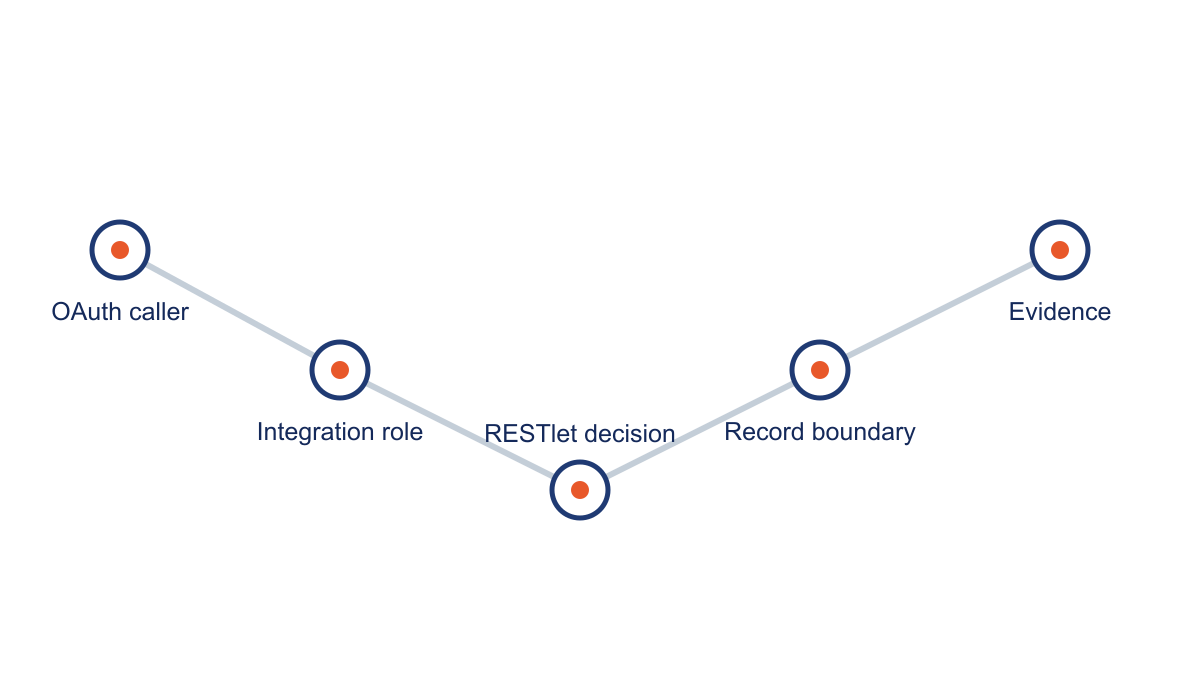
Figure 1: A practical evidence path for this assessment. The stages are an editorial test-planning model based on the cited provider documentation.
Start with role and record design
Oracle's API permission page warns that REST and SOAP services, SuiteAnalytics Connect and SuiteScript can require permissions for forms, sublists, fields and other components beyond the main API permission. It also warns that the SuiteAnalytics Connect "Read All" permission exposes sensitive employee and customer records. Oracle NetSuite documentation A useful pentest therefore inventories the actual role assigned to the integration, its record permissions, restrictions and script deployment. The tester then proves an allowed result and a denied result with controlled records.
A finding should not merely say that an endpoint returned data. It should specify whether that data belonged to the integration's assigned subsidiary, whether the caller's role was meant to see the field, which RESTlet action made it available, and what the business consequence is. This is the difference between a report an ERP owner can fix and a generic list of HTTP responses.
Test authentication without confusing it with authorization
Oracle's authentication overview distinguishes RESTlets from REST Web Services and lists OAuth 2.0 and token-based authentication for RESTlet access. The guide specifically recommends OAuth 2.0 for RESTlets. Oracle, Authentication Overview Document which mode the actual integration uses. Review integration record ownership, token storage and rotation, and the role associated with each credential. Do not attempt broad credential guessing or high-volume traffic against a shared platform.
The negative case is as important as the successful call. Use a test identity without the required role, a role with narrower record rights, and a synthetic record outside the intended boundary. Compare results for the same operation. If the script performs its own authorization check, request source-assisted review of that code. If source is unavailable, state that the conclusion is based on observable behavior, not a full review of all paths.
Include customer-built code and connected systems
A RESTlet's script and its caller may be owned by different teams. The SOW should list the script deployment, relevant SuiteScript modules, caller application, API gateway, middleware, and exported destination. Authorization to test one component does not automatically extend to Oracle's underlying service or a third-party recipient. Agree the permitted methods and traffic limits under the customer's current terms before execution.
Use test transactions and fake employee or customer records. The report can then show whether a field escaped, whether an update crossed a subsidiary boundary, or whether an export included unintended rows without placing private business data in the evidence. Retest the same synthetic case after the owner changes a role, script or mapping. A pure configuration screenshot cannot prove the runtime outcome; a response alone cannot identify the control to fix.
Separate the RESTlet from other NetSuite interfaces
The first scoping mistake is to put all NetSuite APIs under one label. Oracle states that RESTlets are part of SuiteScript, not the NetSuite web-services feature. A role with the Web Services Only option can make web-service calls but cannot use a RESTlet under that role. Oracle, REST Roles Service A buyer should list the exact RESTlet script and deployment IDs, its entry points, the calling application and any separate SuiteTalk REST or SuiteAnalytics Connect path. Testing one does not automatically test the others.
Oracle's RESTlet deployment guidance says a RESTlet has a script record and a deployment record, and that the deployment must be Released before an external caller can invoke it. The script entry points determine which HTTP methods are implemented. Oracle, Deploying a RESTlet An assessment should therefore compare the methods actually exposed by the deployment with the methods the business process requires. If a read-only integration exposes an update or delete path in customer-built code, the test plan should include a controlled negative case. If that path is not deployed or is unavailable to the test identity, record the limit rather than claiming it was exercised.
The OAuth integration record is another distinct object. Oracle's setup guide requires a role assigned to a user, an integration record and an enabled OAuth 2.0 feature. The authorization request can specify restlets, rest_webservices and suite_analytics scopes, subject to the record's enabled scopes. Oracle, OAuth 2.0 setup for RESTlets and authorization parameters make the distinction clear. Record which scopes the production application was granted. A RESTlet token should not be assumed to grant an unrelated analytics or web-services capability; test any such path separately with the authorized identity.
Interface or artifact | What to name in the SOW | A useful negative case | What a result can prove |
|---|---|---|---|
RESTlet deployment | Script ID, deployment ID, entry points and status | Restricted role calls the same method | Whether that caller can execute this deployed path |
Integration record | OAuth flow and enabled scopes | Controlled app requests a scope it should not receive | Whether the requested integration scope was granted |
NetSuite role | Record, field and subsidiary permissions | Same RESTlet accesses an out-of-scope synthetic record | Whether the observed role and script combination crossed the business boundary |
SuiteTalk REST | Explicit endpoint and role, if used | Denied role attempts a selected operation | Only the selected web-service path, not the RESTlet |
SuiteAnalytics Connect | Dataset and access permission, if used | Bounded query tests a restricted field | Selected analytics exposure, not every report or record |
An external RESTlet uses an account-specific domain, and Oracle's authentication guide distinguishes OAuth authentication from a same-account caller that can reuse its existing session. Oracle, Authentication for RESTlets That difference matters in a test: a successful internal call does not establish that the external OAuth path was configured correctly. Conversely, an OAuth test does not cover a script-to-script call that inherits its caller's privileges. Oracle documents that https.requestRestlet adds authentication for internal calls and that the RESTlet runs with the calling script's privileges. Oracle, Secure communication between SuiteScript scripts and REST endpoints
Review authorization inside the customer-built script
An authenticated RESTlet can still make the wrong object-level decision. Ask the script owner to identify the point where the code selects a record, searches a dataset, checks a subsidiary or validates a caller-supplied identifier. Then run matched cases: one record the integration should access, one in a different synthetic subsidiary or owner group, and one with a restricted field. Keep the method and role constant while changing only the object. If the result changes unexpectedly, review the relevant branch of the SuiteScript code and the underlying role permission together. This avoids blaming OAuth for an authorization flaw in a search or record-update path.
Input validation deserves its own case. A RESTlet may accept an external ID, a transaction action, a date range or a list of record IDs. For each high-impact parameter, document the accepted type and range, then try a small invalid value and a business-rule violation with synthetic data. Do not turn the exercise into high-volume fuzzing on a shared ERP. Oracle's SuiteScript governance model limits script execution by usage units, and its RESTlet governance page says account concurrency is shared with web-service requests. Oracle, SuiteScript Governance and Limits and RESTlet Governance and Security support a bounded request budget in the rules of engagement.
Error handling is part of the evidence. If a restricted record produces a failure, the report should retain a sanitized status, error class and relevant log event. A failure could mean the role denied access, the script rejected the business rule, the record did not exist, or the test fixture was wrong. Those are different conclusions. If a script catches an authorization error and returns a generic success, the customer may need source review or a state check to see whether the operation actually changed anything. The buyer should require before and after states for any selected write case.
Turn a test request into an acceptance decision
For a NetSuite RESTlet, the finance owner should approve the expected record and subsidiary decisions before the test. The integration owner supplies the script and deployment IDs, OAuth application, caller and destination. The ERP security owner supplies the assigned role and a deliberately narrower test role. Together they define a small synthetic dataset with known ownership and field values. This setup makes a successful read or write interpretable. A single authenticated call without a negative object case shows connectivity, not least-privilege behavior.
The report should attribute each result to the specific boundary exercised. A rejected token is an authentication result. A call denied before the script runs is a deployment or role result. A call that reaches the script but returns another subsidiary's synthetic record may reflect role permissions, code-level selection or both. Retain sanitized request and response classes, the relevant script decision or permission snapshot, and before and after state for writes. Label ambiguous behavior as inconclusive until the owner can inspect execution logs or source. Retest the same method, role and synthetic record after remediation.
Agree the test envelope before sending traffic: account or sandbox, integration and roles, allowed script methods, small request budget, approved window, monitoring contact and stop condition. Oracle's RESTlet and web-service concurrency controls make a bounded run operationally important. Oracle, RESTlet Governance and Security Use fake transactions and records so evidence can be retained safely. Explicitly authorize the customer-built RESTlet, caller and destination; do not assume that ownership of a NetSuite account authorizes testing Oracle infrastructure or an independent third-party service.
Procurement questions worth asking
Ask the tester to name the RESTlet deployment and entry points they expect to exercise. Can they distinguish a RESTlet from SuiteTalk REST and SuiteAnalytics Connect in the coverage table? Will they use the actual integration role and an intentionally restricted role? How will they prove that a subsidiary or field-level denial occurred for the right reason? Which synthetic transaction can be safely updated and restored? A proposal that cannot answer these questions is unlikely to test the ERP authorization boundary a buyer is paying to understand.
Ask how the team will review ambiguous results with the script owner. A script can return an error because a record is absent, a role denied access, a governance limit was reached or an explicit business rule rejected the action. The acceptance criteria should require the provider to distinguish these where evidence permits and to state the limit when it cannot. Require a handoff to the finance systems owner for any confirmed cross-subsidiary, field or write-path issue, plus a retest plan that repeats the original method and record relationship.
A worked acceptance case for an ERP owner
Consider a fictional order-to-cash connector that reads approved invoice fields and posts a status update to a customer-owned application. In the scope packet, the finance owner identifies two synthetic invoices in the permitted subsidiary and one in a denied subsidiary. The integration owner identifies the OAuth application, assigned NetSuite role, RESTlet deployment and destination. The expected result is that the RESTlet returns only approved fields for the permitted invoices, denies the out-of-scope invoice, and accepts a status update only for the intended state transition. These are example test fixtures, not a description of any customer environment.
The tester first makes a permitted read and records the role, method, synthetic invoice ID and returned field list. The tester then repeats the same method under a restricted role, and again for the out-of-scope invoice. For the write path, the tester captures the before state, tries an approved update, then attempts a forbidden transition on a separate synthetic invoice. The script owner can review source for how it handles the identifier and state. The destination owner verifies that no extra field escaped into its own logs or queue. This set of cases tests an actual business boundary; a single successful login or a list of HTTP headers would not.
The final report should state which control explains each decision. A role restriction may prevent a call before the RESTlet executes. A RESTlet branch may enforce an additional business rule. A subsidiary constraint may govern which records are visible. The connected application may impose its own authorization after receiving data. A finding should identify the observed decision and the most likely owner, then indicate what evidence would confirm the root cause. The retest repeats the same synthetic invoice and role combination after the owner changes the responsible control.
For procurement, acceptance should require a coverage table for each selected script entry point, role and record boundary. Every row gets a result or a stated limit. Any confirmed deviation gets a sanitized proof, impact explained in ERP terms, remediation owner and retest plan. This lets a finance systems leader compare proposals by coverage and evidence, while preserving the security team's need for a technically reproducible finding.
Prepare an integration inventory that makes the quote comparable
Before asking for a proposal, identify the RESTlet script and deployment IDs, current deployment status, implemented methods and the application that calls each method. Record the integration record, OAuth mode, enabled scopes, assigned user and role, and where the caller stores or refreshes credentials. Add the main record types, subsidiaries, custom fields and the customer-owned systems that receive exported data. This inventory helps a tester estimate the number of meaningful role and object comparisons. It also keeps a SuiteTalk or Connect review from being silently bundled into or omitted from a RESTlet assessment.
Ask the finance owner to rank the business actions rather than only the endpoints. Reading a customer record, changing a bank-related field, posting a transaction and exporting an analytics dataset have different consequences. Select a few actions where a wrong authorization decision would matter most. For each one, provide a synthetic permitted record and a synthetic denied record with known subsidiary and ownership. If a write test is approved, define a reversible state and a person who can verify it. This is more informative than expanding the request count across every method without a business rule.
The script owner should indicate what can be reviewed. Source-assisted testing can inspect how a supplied ID becomes a record lookup, how a search is filtered, whether a role or subsidiary condition is checked, and whether errors are translated into misleading success responses. A runtime-only test can still compare observed outcomes, but it cannot establish that unvisited branches or internal helper calls are safe. The contract should use the right label for each method and list unreviewed code paths.
Finally, request an evidence sample from bidders. It should demonstrate how they would record an OAuth scope or role, RESTlet method, synthetic record relationship, expected decision, observed response and likely control owner without copying a live token or business record. A provider that can show that format before the engagement is more likely to return a report that an ERP and integration team can act on. When the RESTlet changes later, that same case can become a targeted regression test or retest trigger.
If several RESTlets share one integration role or one middleware service, ask whether a single mistake could affect all of them. The SOW can sample the common authentication and role design, then select distinct record and write decisions from each material workflow. The report should make clear which conclusions came from the common component and which came from a specific script. That distinction helps the buyer avoid paying twice for the same check while still covering business rules that differ across scripts.
What Stingrai can scope
Stingrai is a CREST-accredited penetration testing company with human-led web, API and cloud testing for regulated and enterprise environments. A quote for this topic should begin with the named customer-owned assets and their authorization boundaries. The testers can compare role or identity behavior, document confirmed findings with proof and remediation guidance, and retest remediated findings. Stingrai's service overview describes the available assessment areas.
A one-time assessment can answer a defined procurement or audit question. For a changing integration or cloud configuration, the buyer may choose a continuous program as well. The SOW should state the coverage and evidence expected in either model. Findings should support the customer's own security and audit program without substituting for the customer's control ownership.
Frequently Asked Questions
What should a NetSuite RESTlet penetration test include?
Include the customer-built RESTlet, its integration record and authentication method, assigned roles, record and field authorization, subsidiary restrictions, selected SuiteScript decisions, and the approved caller and destination.
Is OAuth 2.0 enough to secure a RESTlet?
No. OAuth 2.0 authenticates an integration request, while the assigned role, record permissions and script logic determine what the caller can read or change. Test those decisions separately.
Should SuiteAnalytics Connect be in the same scope?
Include it only if the integration uses Connect or the buyer needs to assess an export path. Oracle warns that Read All access can expose sensitive records, so the permission deserves explicit review where present.
What should a report show?
Show the identity, role, synthetic record, expected permission, observed result, relevant script or configuration, business impact, remediation owner and retest result for each confirmed issue.
Related reading
Workday Integration Security Assessment: A Buyer Scope for 2026
API Authorization Test Matrix 2026: What a Buyer Should Ask to See
Talk to Stingrai
Share the assets, identities and expected access decisions you want tested. Get a Quote or book a free discovery call to define the authorization boundaries and deliverables.